
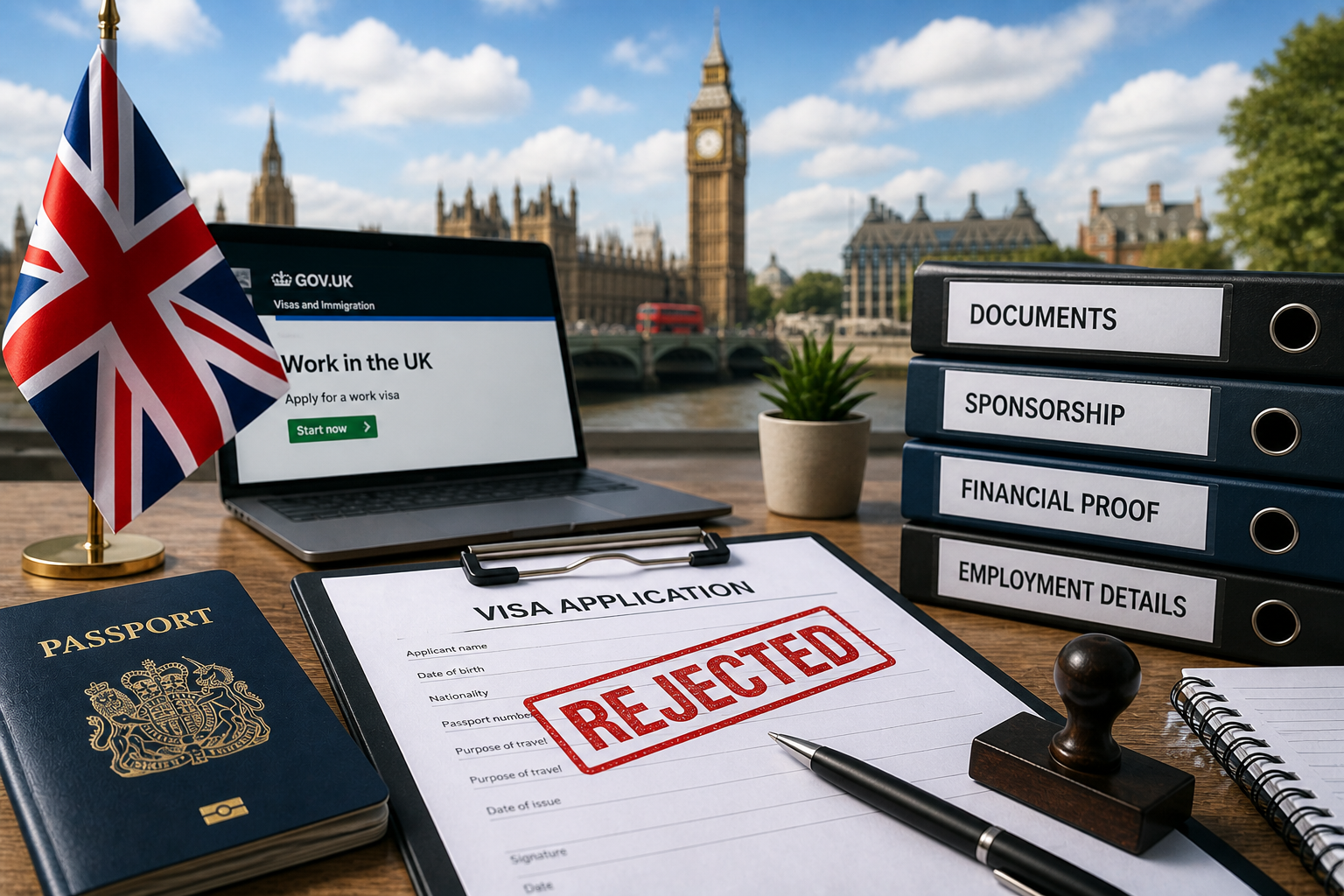
Applying for a UK work visa can be a life-changing step, but many applicants face rejection due to avoidable mistakes. Understanding the UK sponsorship visa rejection reasons is essential if you want to improve your chances of approval.
In this detailed guide, we’ll break down the most common reasons for rejection and provide practical strategies to avoid them.
A UK work visa typically requires sponsorship from a licensed employer approved by UK Visas and Immigration (UKVI). The employer issues a Certificate of Sponsorship (CoS), which forms the backbone of your visa application.
However, even with sponsorship, your visa can still be rejected if certain conditions are not met.
One of the most common UK sponsorship visa rejection reasons is submitting incomplete or incorrect documents.
Examples:
How to avoid it:
Double-check every document. Follow the official checklist and ensure all documents are up to date and properly formatted.
Applicants must prove they can support themselves financially unless their sponsor certifies maintenance.
Common issues:
How to avoid it:
Maintain the required balance consistently and provide clear, stamped bank statements.
If your sponsor provides incorrect details or an invalid CoS, your application may be rejected.
Common errors:
How to avoid it:
Verify all details with your employer before submission. Ensure the job role matches UK immigration guidelines.
Applicants must demonstrate English proficiency through approved tests or qualifications.
Mistakes include:
How to avoid it:
Take a recognized English test and meet the minimum score requirements.
The UK has strict salary requirements depending on the job role.
Typical issue:
How to avoid it:
Ensure your job offer meets or exceeds the minimum salary defined for your role.
If authorities suspect the job offer is not genuine, your visa may be refused.
Red flags:
How to avoid it:
Work only with legitimate, licensed sponsors. Research your employer thoroughly.
Previous visa refusals, overstays, or violations can impact your application.
How to avoid it:
Be honest in your application. Disclose past issues and provide explanations if necessary.
Even small mistakes can lead to rejection.
Examples:
How to avoid it:
Carefully review your application multiple times before submission.
Applicants from certain countries must submit TB test certificates.
How to avoid it:
Check if your country requires TB testing and complete it at an approved clinic.
If your job requires specific qualifications or experience, failing to prove them can result in rejection.
How to avoid it:
Submit verified certificates, degrees, and work experience letters.
Always confirm that your employer is listed as a licensed sponsor under UKVI.
All details—name, date of birth, job title—must match across every document.
Avoid blurry scans or unofficial translations. Use certified translations where required.
Last-minute applications increase the risk of errors and missing documents.
Immigration consultants or legal experts can help you avoid critical mistakes.
Understanding UK sponsorship visa rejection reasons is the first step toward a successful application. Most rejections happen due to preventable errors—missing documents, incorrect information, or failure to meet requirements.
If you prepare carefully, verify every detail, and follow official guidelines, your chances of approval increase significantly.
A well-prepared application not only avoids rejection but also speeds up the entire process, bringing you one step closer to working in the UK.