
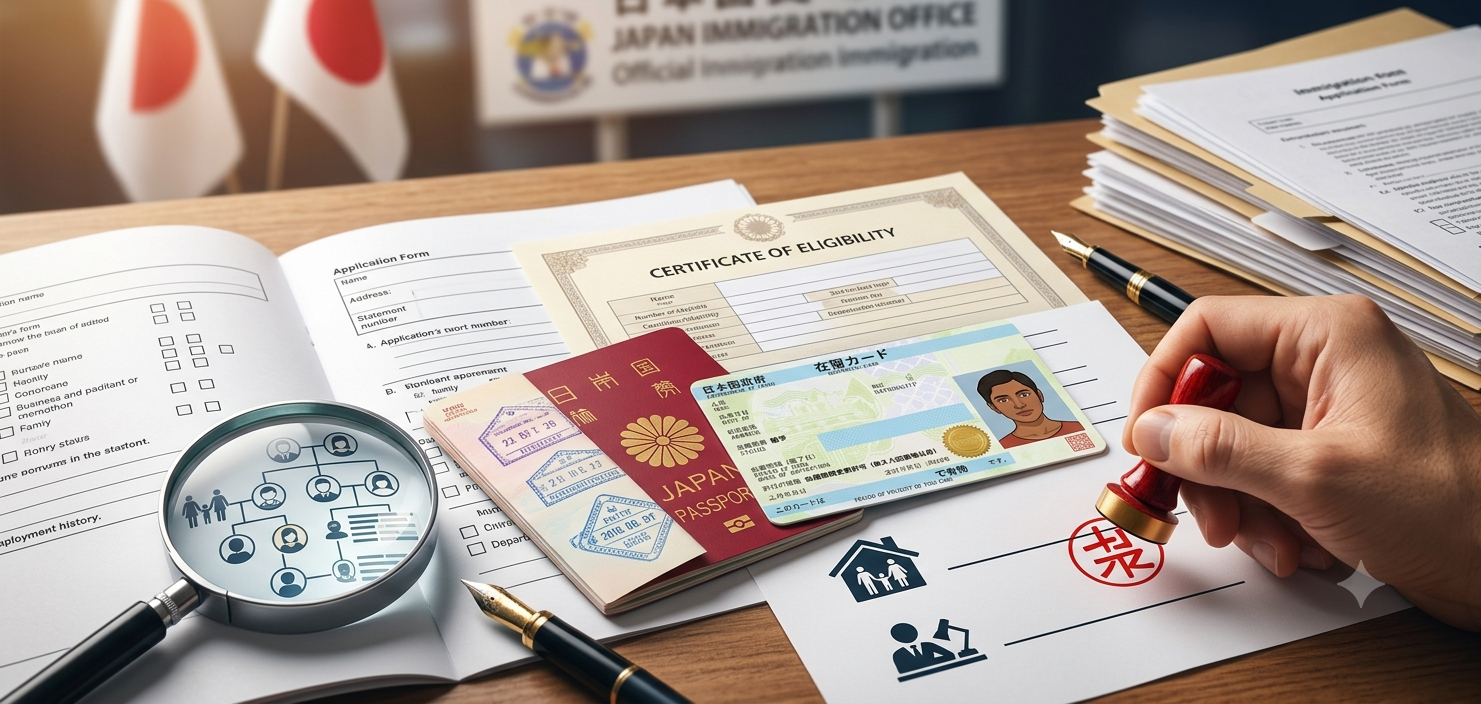
Japan is one of the world’s most attractive destinations for individuals seeking long-term residence due to its excellent healthcare system, strong economy, high standard of living, and rich cultural heritage. While many foreign nationals enter Japan through work, student, or family visas, some qualify for a Japan Long-Term Resident Visa, a unique residence status granted under special circumstances.
Unlike many visa categories that are tied to employment or family sponsorship, the Japan Long-Term Resident Visa is awarded based on humanitarian considerations, family connections, or other exceptional situations determined by the Japanese government.
This comprehensive guide explains everything you need to know about the Japan Long-Term Resident Visa, including eligibility criteria, required documents, application procedures, benefits, renewal process, and important Japanese immigration requirements.
The Japan Long-Term Resident Visa is a residence status granted by the Japanese Immigration Services Agency to individuals who do not fall under standard visa categories but are recognized as having legitimate reasons to reside in Japan for an extended period.
The visa is issued on a case-by-case basis, and eligibility is determined by the Japanese government rather than a fixed list of applicants.
Unlike work visas, the Long-Term Resident Visa generally allows holders to engage in almost any type of legal employment without requiring separate work authorization.
Eligibility depends on individual circumstances. Common applicants include:
Each application undergoes an individual assessment by Japanese immigration authorities.
Applicants generally need to demonstrate:
Applicants must provide sufficient evidence explaining why they need to reside in Japan.
Examples include:
Applicants should prove they can support themselves financially through:
Immigration officers evaluate whether the applicant is unlikely to become financially dependent on public assistance.
Applicants should:
Applicants must submit authentic documentation supporting their relationship, residence history, or humanitarian circumstances.
Meeting Japanese immigration requirements is essential for obtaining a Long-Term Resident Visa.
Applicants typically need to satisfy the following:
Failure to meet these Japanese immigration requirements may result in delays or application rejection.
Document requirements vary depending on individual circumstances.
Common documents include:
Japanese authorities may request additional documentation during processing.
Many applicants obtain a Certificate of Eligibility before applying for the visa.
The COE confirms that the applicant meets the requirements for residence in Japan and significantly simplifies the visa application process.
Typically, a family member, sponsor, or legal representative in Japan submits the COE application to immigration.
Review whether your circumstances qualify under Japan’s Long-Term Resident category.
Collect all supporting documentation carefully.
Ensure all foreign-language documents are translated into Japanese where required.
If applicable, submit the COE application through the regional immigration office in Japan.
After receiving the COE, submit your visa application to the Japanese embassy or consulate in your country.
Immigration authorities may request:
Once approved, your passport will be issued with the appropriate visa allowing entry into Japan.
After arriving in Japan, eligible residents receive a Residence Card, which serves as official proof of legal residence.
Processing times vary depending on:
Generally, applicants should expect processing to take several weeks to a few months.
Long-Term Resident Visas may be granted for:
The period granted depends on the applicant’s circumstances and immigration assessment.
Yes.
One of the major advantages of the Japan Long-Term Resident Visa is the flexibility to work.
Visa holders can generally:
Unlike many work visas, employment is not restricted to a specific profession.
Applicants enjoy broad employment opportunities without occupation-specific restrictions.
The visa allows individuals to establish long-term residence in Japan.
Residents may enroll in Japan’s National Health Insurance system.
Children may attend Japanese public schools.
Residents can generally:
Depending on individual circumstances, Long-Term Residents may eventually become eligible to apply for permanent residency.
Applicants wishing to remain in Japan beyond their visa validity must apply for renewal before expiration.
Renewal generally requires:
Immigration evaluates whether applicants continue to satisfy the required conditions.
Applications may be refused due to:
Carefully preparing the application significantly improves approval chances.
| Feature | Long-Term Resident | Permanent Resident |
|---|---|---|
| Renewal Required | Yes | No |
| Residence Period | Fixed | Unlimited |
| Employment Restrictions | Very Few | None |
| Path to Citizenship | Possible | Possible |
| Government Approval | Required | Required |
Permanent residence offers greater long-term stability, but many foreign nationals first live in Japan under Long-Term Resident status before applying.
Yes. Most holders may work in nearly any legal occupation without employer-specific restrictions.
Some applicants require a sponsor or family member depending on their circumstances.
In many cases, eligible family members may also qualify for residence, subject to immigration approval.
Yes. As long as you continue meeting the eligibility conditions and Japanese immigration requirements, you can apply for renewal before your current period of stay expires.
Yes. Many Long-Term Residents become eligible for permanent residency after satisfying Japan’s residency and legal requirements.
The Japan Long-Term Resident Visa provides an important opportunity for individuals with special family ties, humanitarian circumstances, or other recognized reasons to establish long-term residence in Japan. Unlike many visa categories, it offers considerable flexibility in employment, access to public services, and a potential pathway toward permanent residence.
To maximize your chances of approval, ensure that you fully understand the eligibility criteria, gather all required documents, and carefully follow the Japanese immigration requirements. A well-prepared application, supported by accurate documentation and a clear explanation of your circumstances, can help make the immigration process smoother and increase the likelihood of a successful outcome.