
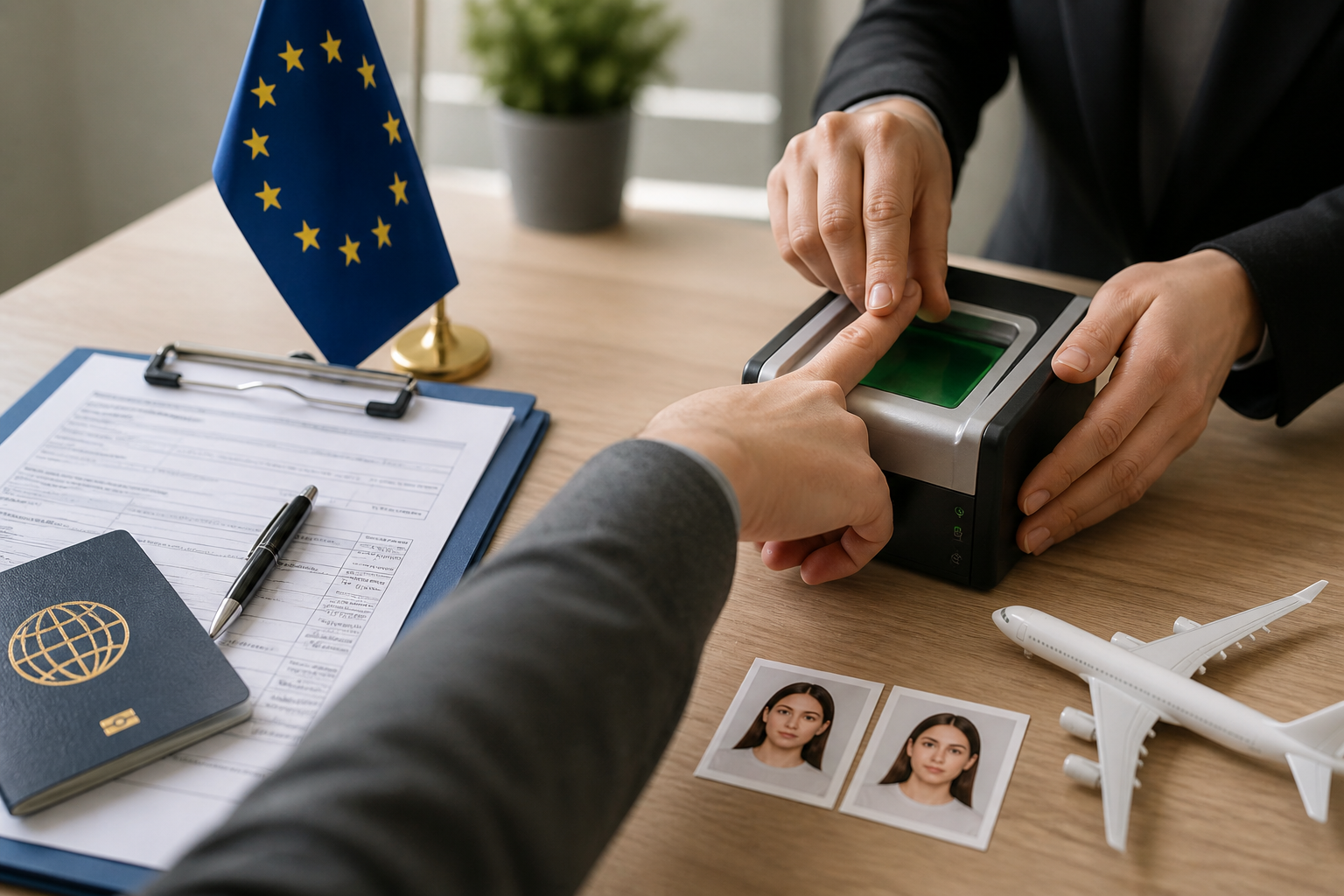
Planning a trip to Europe is exciting, but before exploring destinations across the Schengen Area, travelers from many countries must complete the Schengen tourist visa application process. One of the most important steps is the biometrics appointment.
Many applicants feel nervous because they are unsure about what happens during biometric enrollment, how fingerprints are collected, or what photo requirements apply. Understanding the Schengen visa biometrics process in advance can help reduce stress and improve your chances of a smooth visa application experience.
This guide explains everything you need to know about the Schengen tourist visa biometrics process, including appointments, fingerprint collection, digital photographs, required documents, timelines, and common mistakes to avoid.
The Schengen visa biometrics process is a security and identity verification procedure required for most short-stay visa applicants. During the process, applicants provide:
These biometric details are stored in the Visa Information System (VIS), which helps Schengen countries identify travelers and prevent fraud or identity misuse.
Biometric data usually remains valid for 59 months. If you previously provided biometrics for a Schengen visa within the last five years, you may not need to provide them again, depending on the embassy or visa center.
Schengen countries introduced biometrics to strengthen border security and streamline traveler identification.
The biometric system helps authorities:
The process is mandatory for most applicants applying for a Schengen tour or tourist visa.
Most travelers applying for a Schengen tourist visa must provide biometrics.
However, some applicants may be exempt, including:
Even if you are exempt from fingerprinting, you may still need to submit a passport photo and other supporting documents.
Biometrics are typically collected during your visa appointment at:
You cannot usually complete the biometric process online. Applicants must appear in person unless exempt.
It is recommended to schedule your appointment well in advance, especially during peak travel seasons such as summer and holidays.
The appointment booking process varies depending on the country you are applying through.
Generally, the process includes:
Some countries outsource applications to visa service providers such as VFS Global or BLS International.
Applicants should carry all required documents to avoid delays or rejection.
Commonly required documents include:
Requirements may differ depending on the embassy or applicant profile.
The Schengen visa biometrics appointment is usually straightforward and takes approximately 15 to 30 minutes.
The visa officer or staff member checks your application documents for completeness.
They may ask questions regarding:
All ten fingerprints are scanned electronically using a digital scanner.
The process is quick and painless.
Applicants should ensure:
Poor-quality fingerprints can cause delays or require re-scanning.
A digital photograph may be taken at the center or applicants may need to submit compliant photos.
The photograph is used for facial recognition and identity verification.
After biometrics collection, your application is officially submitted for processing.
You may receive:
One of the most important parts of the application is submitting a compliant visa photo.
Many applications face delays because of incorrect photo specifications.
The standard schengen visa photo size biometrics requirement includes:
The face should cover approximately 70–80% of the image.
Applicants often make avoidable mistakes with visa photographs.
Common issues include:
Ensuring compliance with schengen visa photo size biometrics guidelines can help prevent processing delays.
The biometrics collection itself usually takes only a few minutes.
However, the total appointment duration depends on:
Applicants should arrive at least 15–30 minutes early.
Once biometrics are submitted, the visa application enters the review process.
Authorities may:
Processing times vary by country and season.
Typical Schengen tourist visa processing times range between 15 and 45 calendar days.
Yes, biometric data is generally valid for 59 months in the Visa Information System.
If you applied for a Schengen visa recently, the embassy may reuse your existing biometric data.
However, some embassies may still request a fresh appearance depending on:
Always check embassy-specific requirements before booking travel.
Preparing properly can make your appointment stress-free.
Reach the visa center at least 15–30 minutes before your appointment.
Bring originals and photocopies of all required paperwork.
Wear simple clothing and avoid accessories that may interfere with facial recognition.
Double-check schengen visa photo size biometrics requirements before printing photographs.
Peak travel periods can lead to limited appointment availability.
Dry and clean fingers improve fingerprint scan quality.
Biometrics themselves do not determine visa approval or rejection.
However, issues such as:
may create complications during processing.
The final visa decision depends on the complete evaluation of your application.
Several Schengen countries have improved biometric systems to strengthen security and reduce fraud.
Recent updates may include:
Travelers should always check the latest embassy guidelines before applying.
Yes, biometrics are mandatory for most applicants unless exempt.
Possibly. If your biometrics were collected within the last 59 months, they may be reused.
Schengen biometric data is generally valid for 59 months.
The standard photo size is 35 mm x 45 mm with a white background and recent image quality.
Children under 12 years old are usually exempt from fingerprint collection.
Most appointments are completed within 15–30 minutes.
The Schengen tour/tourist visa biometrics process is an essential step for travelers planning a European trip. Although the process may seem intimidating at first, it is usually simple, fast, and well-organized.
Understanding what happens during the appointment, preparing documents carefully, and following schengen visa photo size biometrics guidelines can significantly improve your overall application experience.
Applicants who prepare in advance are more likely to avoid delays, reduce stress, and complete the visa process smoothly.
Before scheduling your appointment, always verify the latest requirements from the official embassy or authorized visa application center handling your application.